-600x290.png "Discus Store")

-250x250.jpg)


-250x250w.jpg)


-250x250w.jpg)


Share

Aquarium lighting is the heart of any planted aquarium. It powers the photosynthesis of plants and at the same time provides beautiful color tones for both plants and fish.
LED aquarium lighting technology has evolved significantly over the past 10 years. Modern LED lights are more energy efficient and more powerful than older systems, such as T5 fluorescent tubes. In addition, many LED lighting systems improve the visual presentation of colors in the aquarium.
Today's lighting systems offer a range of features, from spectrum adjustment to built-in timers. Some models also have more fancy features, such as simulated lightning or "disco effects." However, these extras are often more for show than for real benefit.
For new aquarists, choosing the right lighting can be confusing. In this article, we will look at the main aspects to consider when choosing lighting for your planted aquarium.
How to Light Your Aquarium: Rim or Suspended
Lights can be suspended and hung from the ceiling or stand for a cleaner, sleeker look in rimless tanks, or mounted on the rim of the aquarium itself.
If the lighting is placed a long way from the water, the light level in the aquarium is significantly reduced. However, special pendant LED lights are designed with this in mind and are usually more powerful to compensate for the loss of intensity.
Installing pendant lights requires a little more effort, but gives you more free space above the aquarium. This allows for a great view of the fish and plants, as well as easy access for maintenance and cleaning the aquarium.
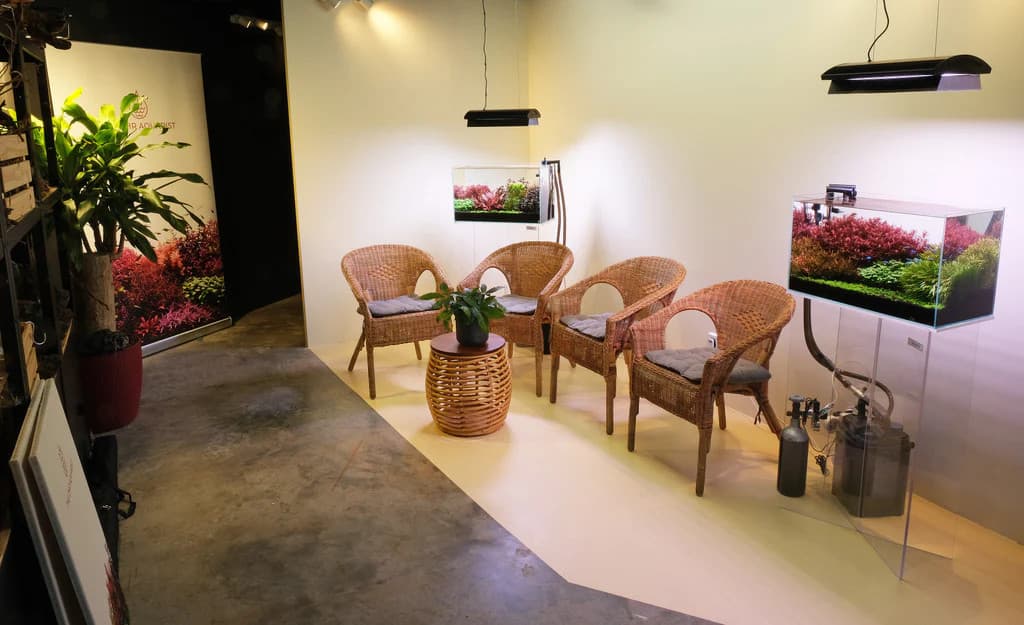
Pendant lamps attached to the ceiling: Week aqua a430.
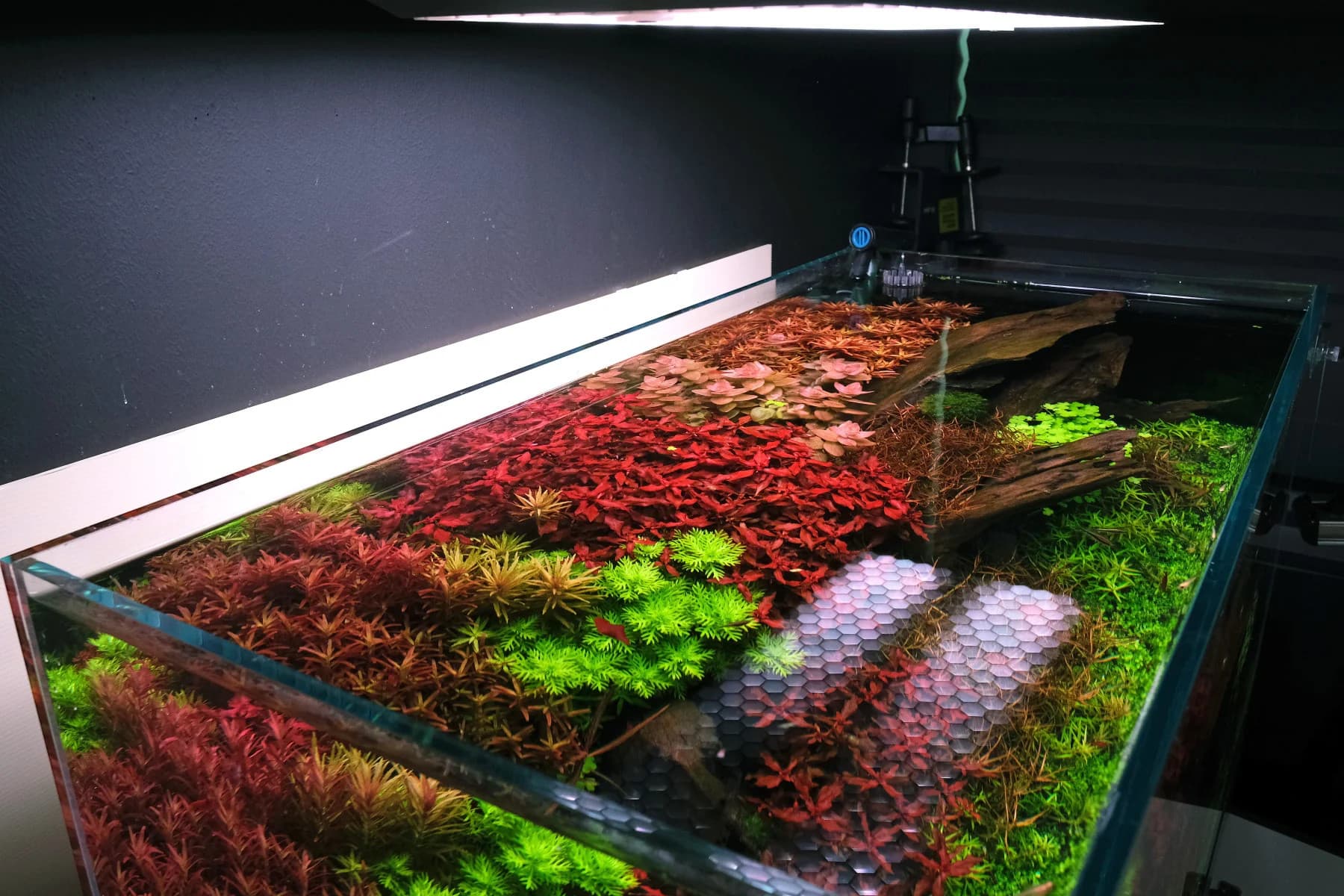
Висящата лампа LEDSTAR AQ-X предлага лесен достъп до аквариума и страхотна гледка отгоре
So, what really matters? 3 important factors for evaluating LED lighting
Factor 1: Wattage - measured in μmol PAR
PHAR (Photosynthetically Active Radiation) is the most accurate measure of the “power” of light as it relates to plant growth, as it directly measures the amount of light available for plant photosynthesis. It counts all photons in the 400 to 700 nanometer range that plants use for photosynthesis.
Most reputable manufacturers provide PAR data for their lights in the form of PAR charts. Additionally, hobbyists with PAR meters also share measurements that you may find helpful.
But what if there are no PAR charts or data from other hobbyists available? One way is to look at aquariums lit with the specific lamp. If other aquarists are successfully growing the same plants that you want, there is a good chance that the lamp will work for your aquarium as well.
Today’s powerful LED fixtures also allow for adjustable light output, making controlling plant growth even easier.
Read the blog post for more information, “How to Read Manufacturers’ PAR Charts.”
Moving a PAR meter around the aquarium will show that PAR levels at the top of the aquarium, near the light fixture, can be many times higher than the light levels reaching the substrate level. The rate at which PAR drops with aquarium depth depends on several factors and is often not completely linear. This is because glass walls reflect light internally, and different fixtures can produce more focused or diffused light, which affects how effectively light penetrates the water.
Click here for information on which part of the light spectrum powers photosynthesis.
Related Products


